Skip to content
Drone Roof InspectionExeter · Devon and the South West

Devon and the South West

A proper look at your roof, with nothing leaning on the house

A drone gets in close enough for a proper look at any roof, however narrow the street or steep the plot, then a written report lands in your inbox within 48 hours.
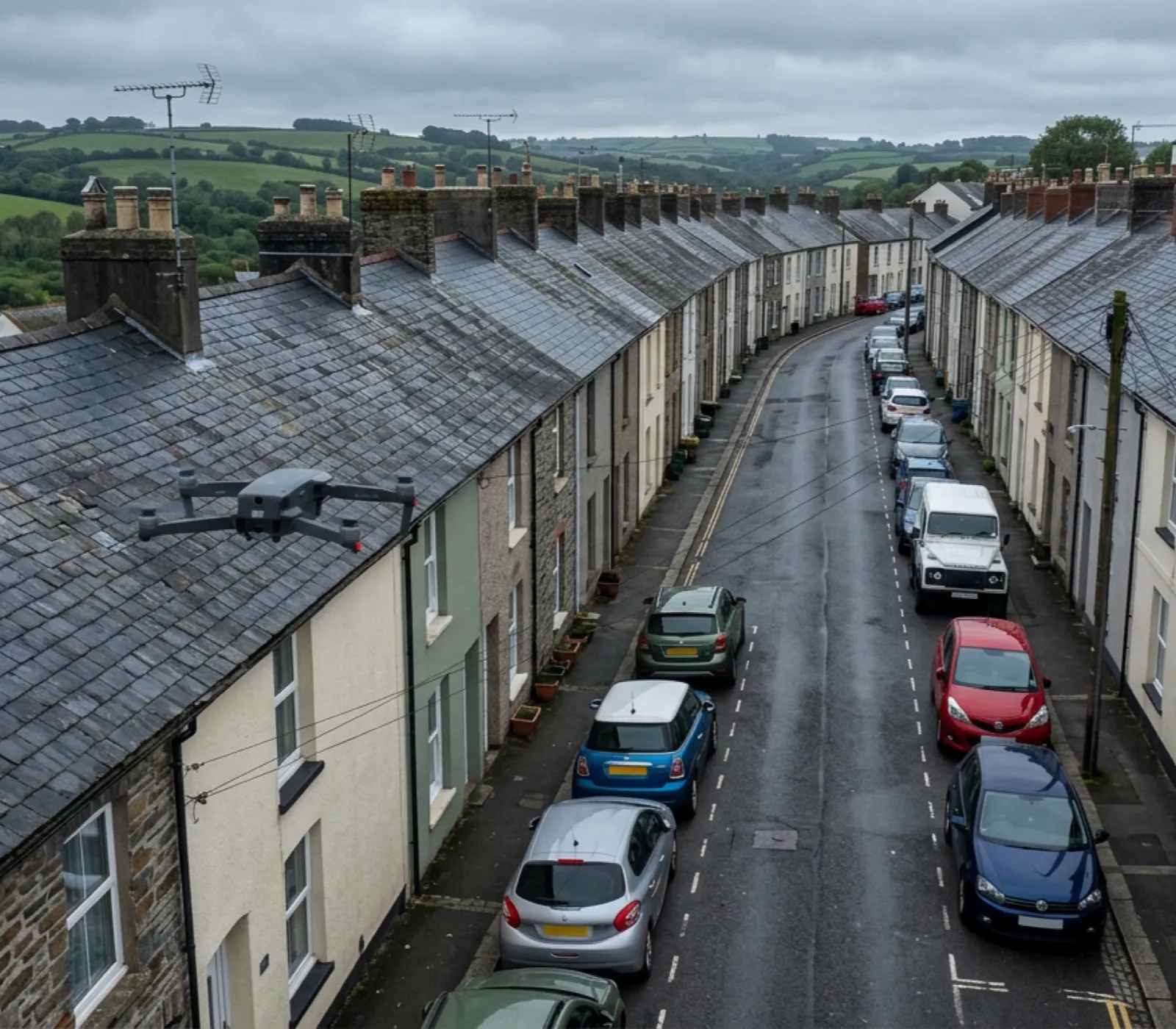
  • No scaffold tower, no ladder against the gutter
  • Works on streets and plots a scaffold lorry cannot reach
  • Fixed price agreed before the visit
  • Written report and full resolution photographs within 48 hours
A narrow Devon terraced street with slate roofs on both sides and a small survey drone hovering above one roofline, no scaffolding or ladders in view

The actual problem

It is not the roof that is hard to get to, it is the access

Nobody avoids getting a roof looked at because they do not care what is on it. They avoid it because the obvious way to find out means a scaffold tower on a street with nowhere to park the lorry, a ladder against a gutter that will not take the weight, or a conversation with a conservation officer before anything can even be fixed to a listed wall.

So the roof stays unlooked at, and the small thing that would have been a cheap fix a year ago becomes the expensive thing a builder finds by accident while quoting for something else.

A drone inspection removes the access problem rather than working round it. Nothing is put up against the house, nothing needs a base built up on the drive, and a street too narrow for a scaffold lorry is no obstacle at all.

What we fly

Two jobs, nothing touches the building either time

The flying is much the same each time. What changes is who is trying to avoid the access cost, a homeowner with one awkward roof or a landlord managing several.
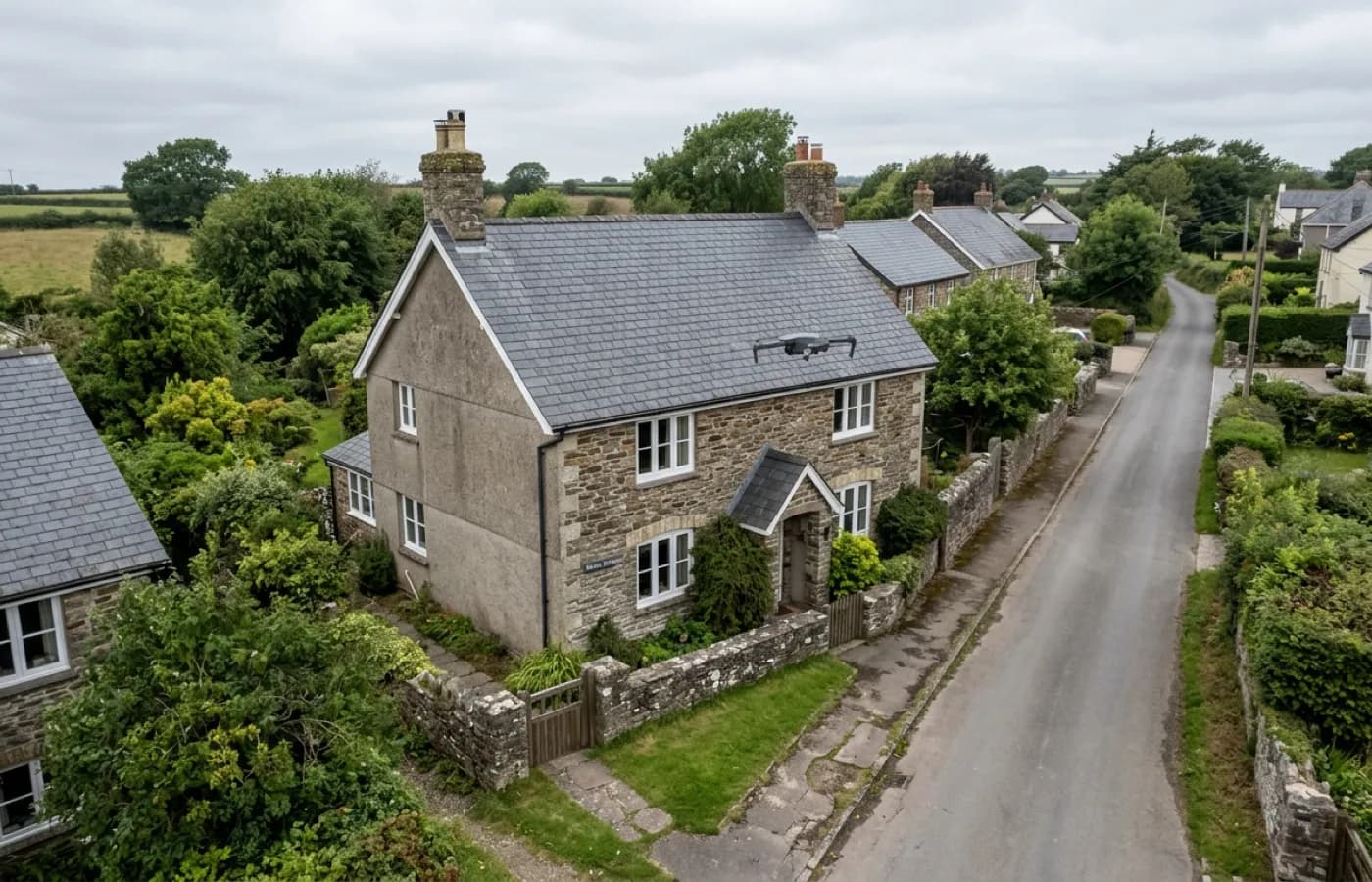
A single Devon house on an ordinary residential street with a survey drone hovering above the roof, no scaffolding or ladder in shot

Drone Roof Inspection

A roof looked at properly, close up, with nothing leaned against the gutter and nothing built up against the wall.

Homeowner inspection
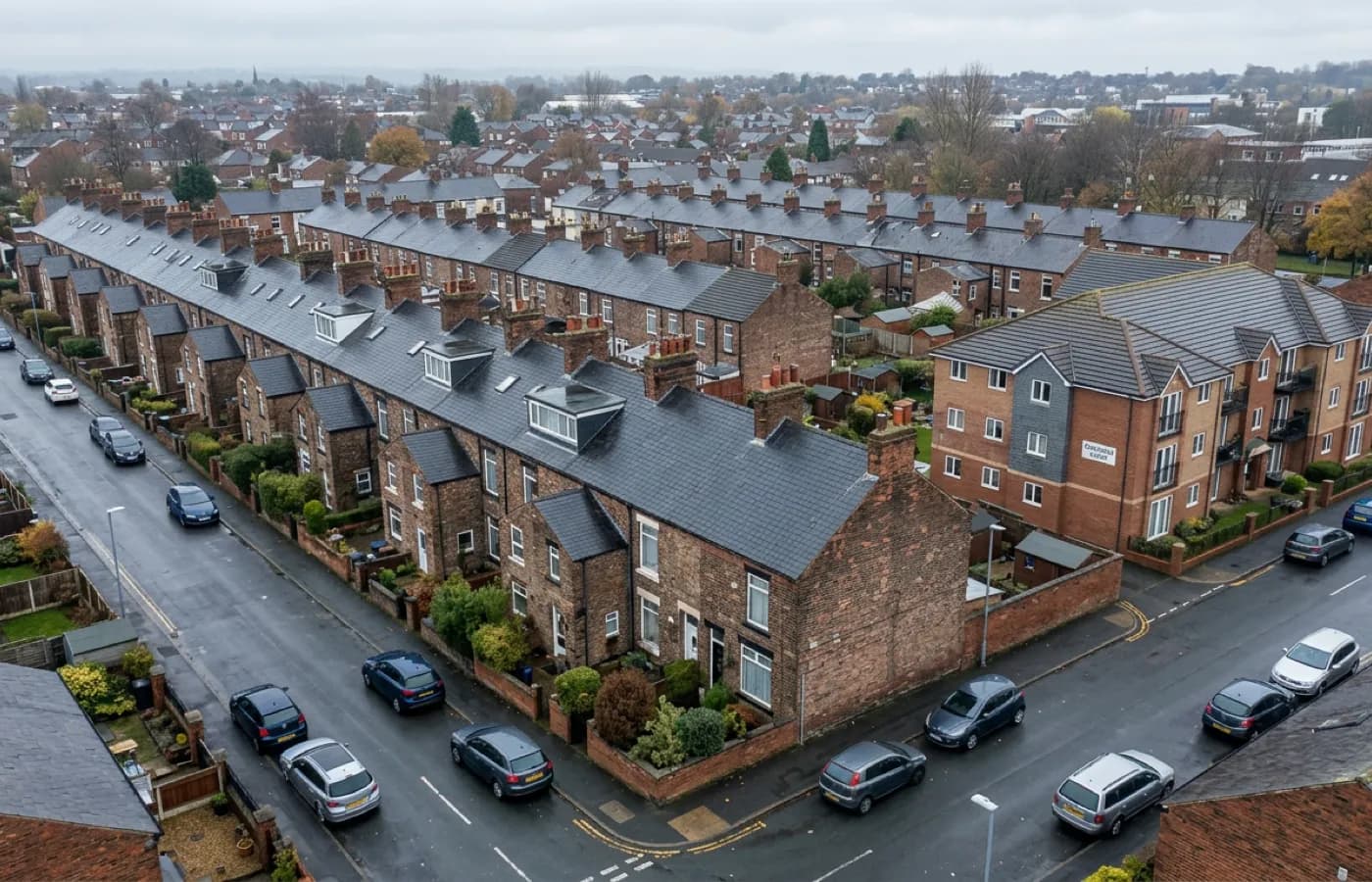
A row of let residential properties seen from above with a survey drone in frame, showing several roofs coverable without scaffolding outside any of them

Landlord Roof Inspection

Scheduled inspections across a portfolio or a block, with no scaffold outside a let property and no weeks of notice for a tenant.

Landlord and agent

Credentials

What sits behind the survey

Nothing put up against the house

No scaffold tower, no ladder against the gutter, no base plate on the drive. The aircraft holds a standoff distance from the building for the whole inspection.

CAA registered

Operator ID and Flyer ID held, plus the A2 Certificate of Competency, which is what allows the closer operation near buildings and streets that makes this work in a terrace or a town centre.

100 megapixel camera

A DJI Mavic 4 Pro with a Hasselblad camera and 6K video. The resolution is what lets the aircraft stay at a safe distance and still return detail close to what a person standing on the roof would see.

Insured with Coverdrone

Full commercial cover for the operation. Certificates go to managing agents, block committees and insurers as a matter of course, without anyone having to chase for them.

What you get
A report that stands in for the person who never had to climb up

The flight solves the access problem. The report is what actually answers the question you had in the first place.
  • An overview image of each elevation, so the roof reads as a whole
  • Close annotated images of anything found, with a note on where it is
  • A plain description of each item and how urgent it looks
  • Ridges, hips, verges, valleys, flashings, stacks and gutters as standard
  • The full resolution originals, so a roofer can zoom in for themselves
  • A clear note on anything that could not be assessed and why
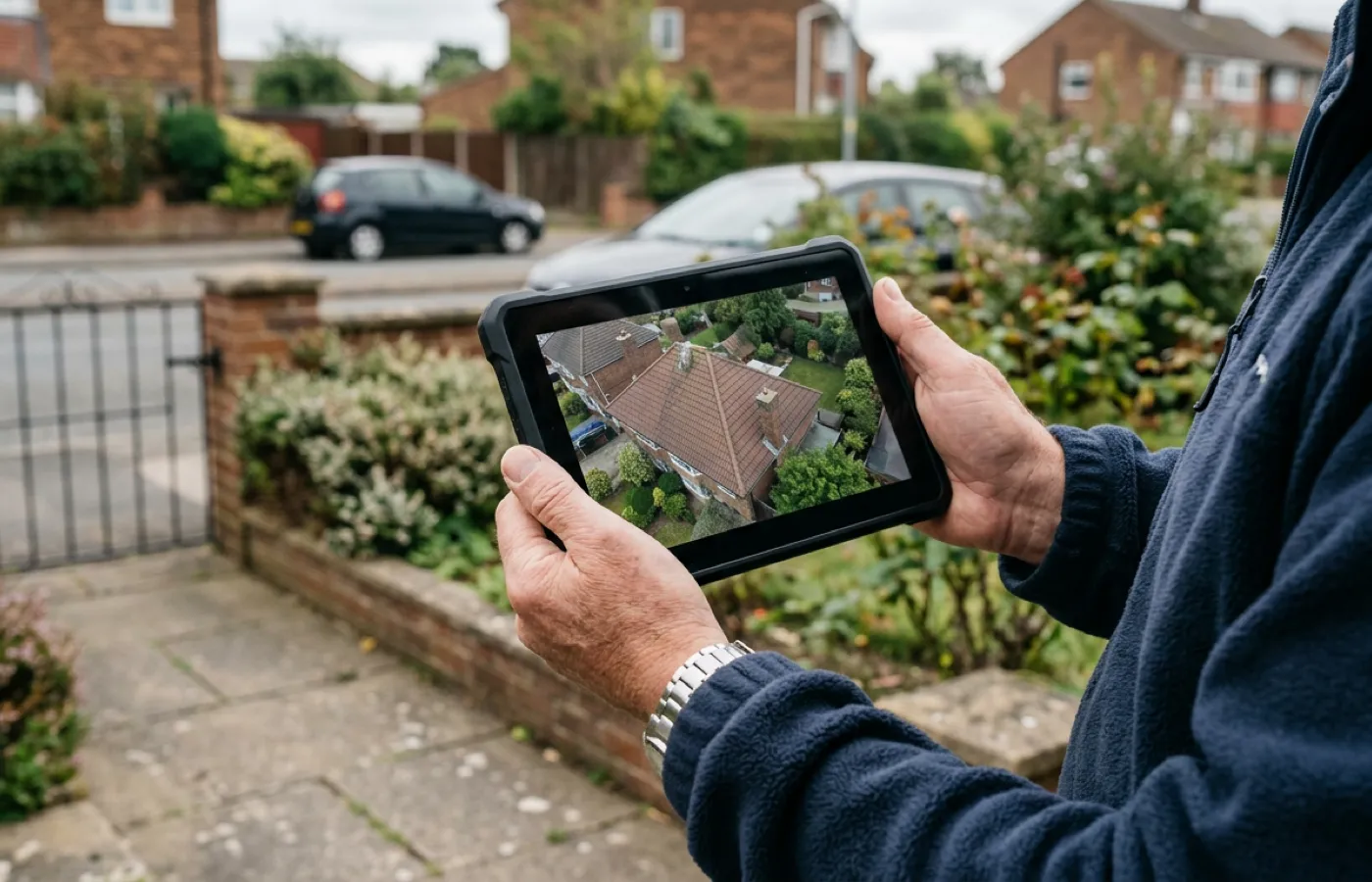
A tablet screen showing live aerial footage of a roof, held at chest height on an ordinary front garden path

What access problems actually look like
Narrow streets, steep sites, listed walls and exposed fronts

None of these stop the aircraft. All of them would have stopped or badly delayed a scaffold or a ladder job.
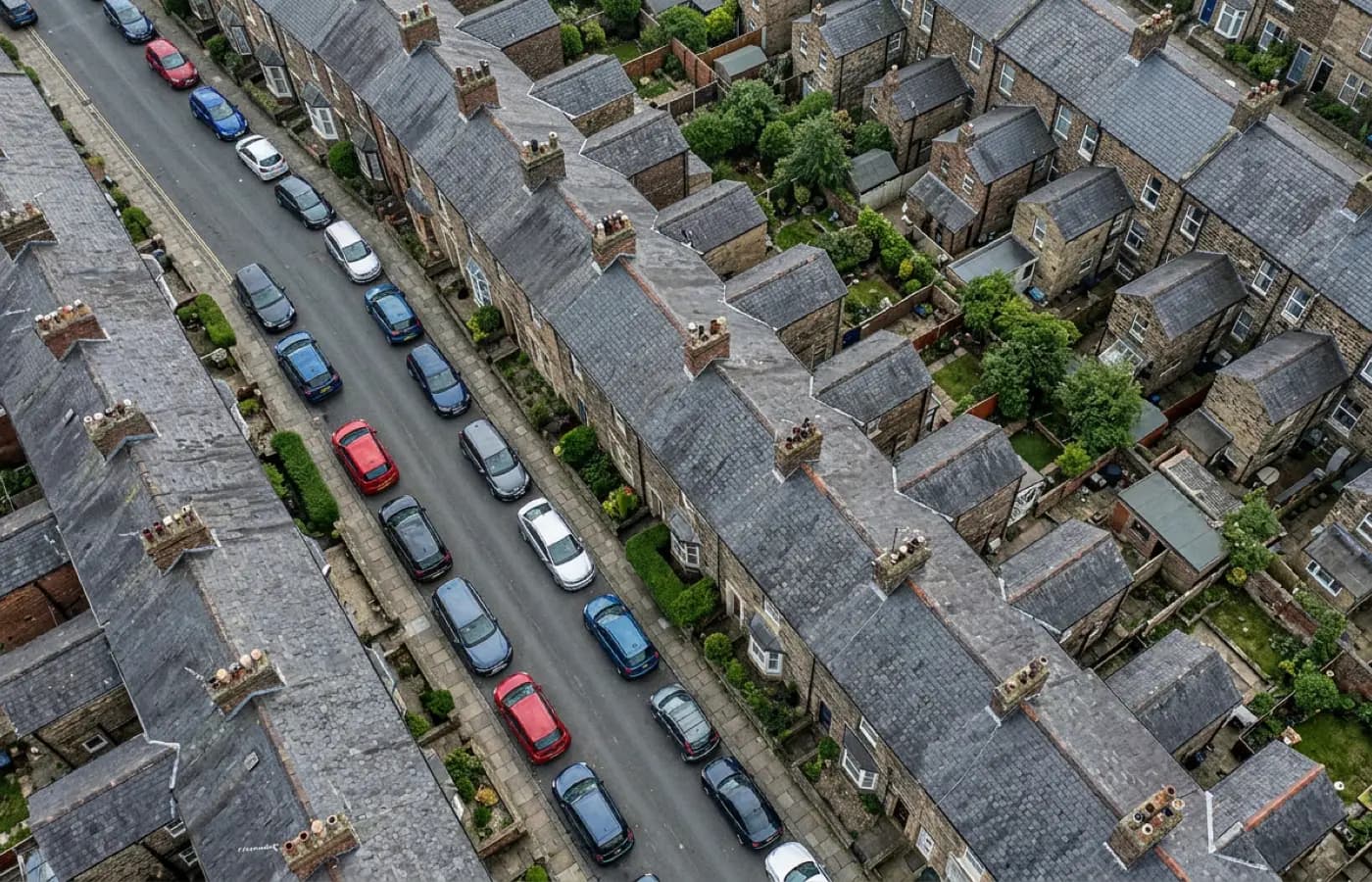
Aerial view straight down a tightly packed Devon terrace, showing how little room there is for a scaffold lorry to park
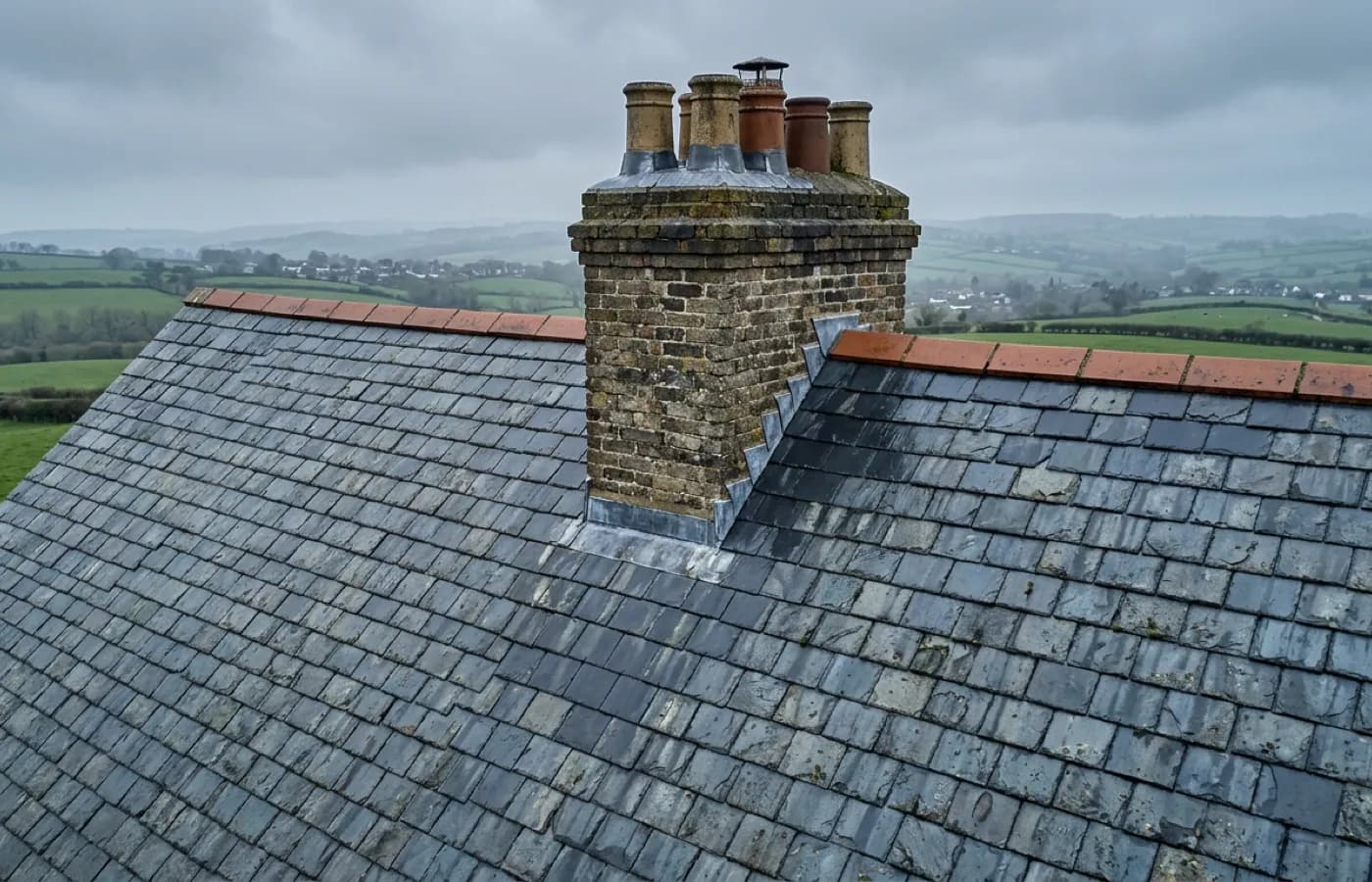
Close aerial crop of a ridge line and chimney stack on a steep roof, photographed from a safe standoff distance
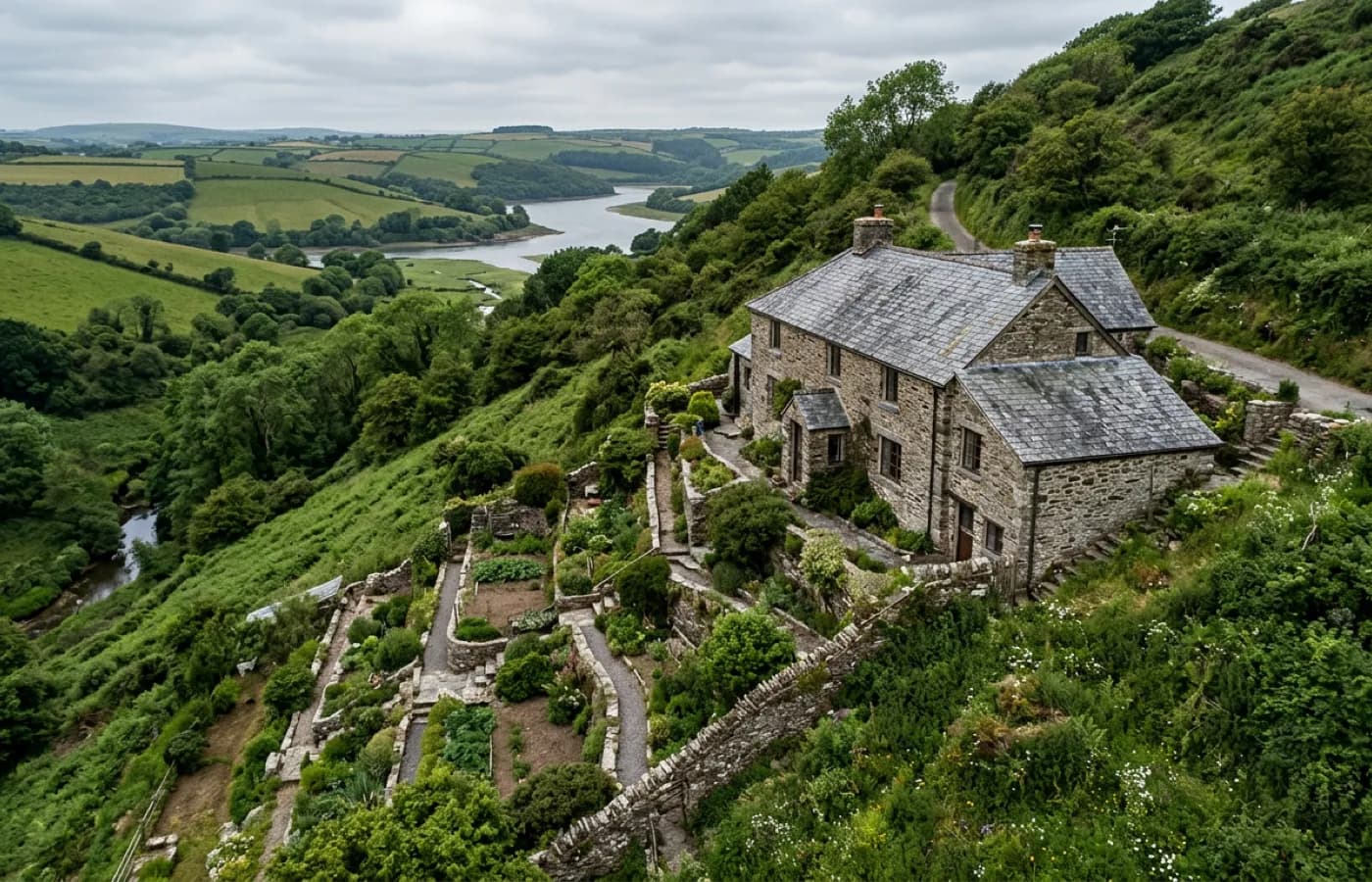
A house roof on a steep hillside plot, showing ground too uneven for a scaffold base without levelling and bracing
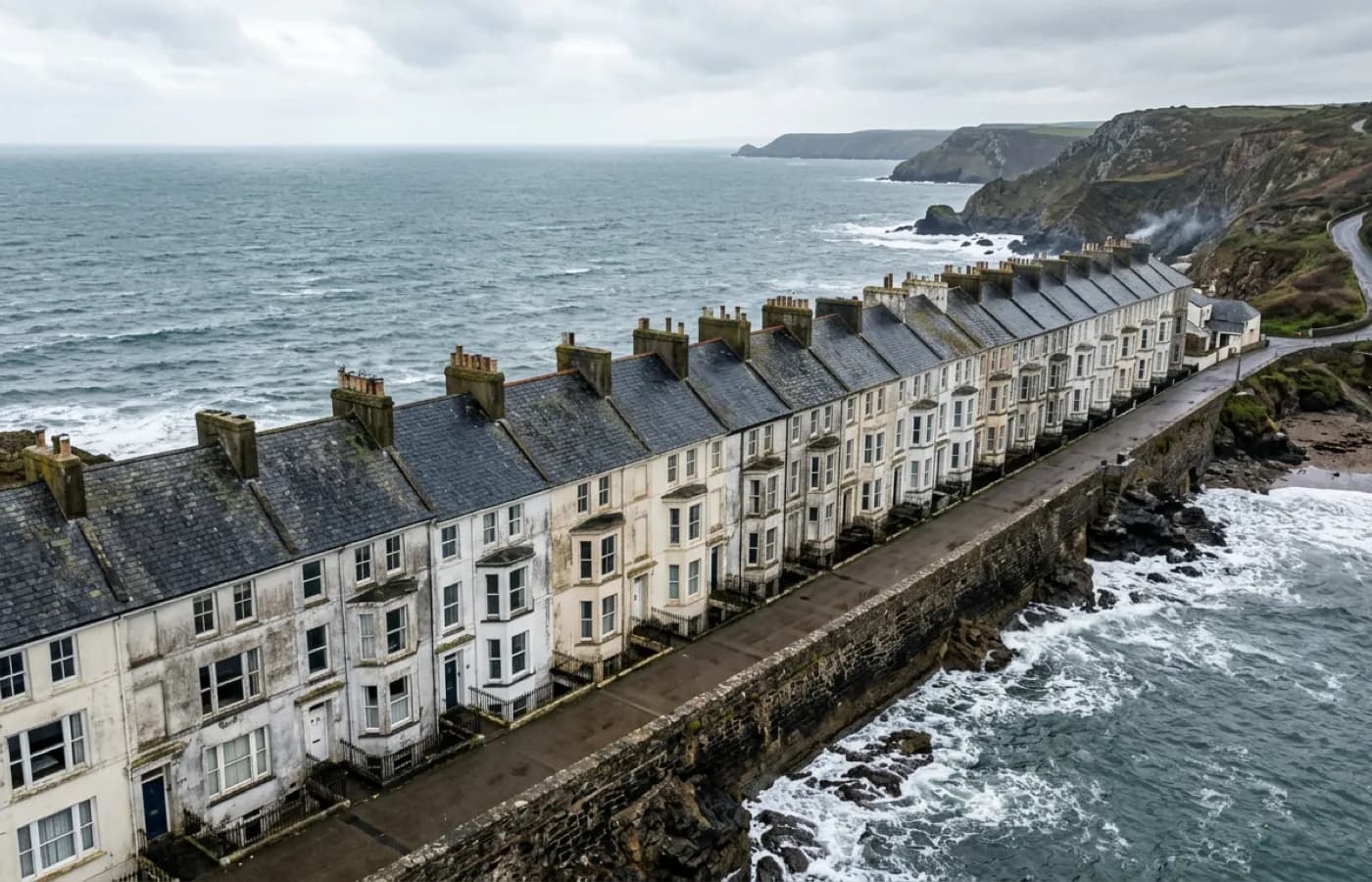
An exposed seafront terrace facing open water, the kind of site where ladder work is slow and unpleasant in most weather

Where we fly

Devon first, then east into Cornwall

Every town below has its own page, written around what actually makes access difficult there, whether that is a medieval street grid, a hillside plot or a stretch of exposed coast.

Questions

Questions we get asked

Is this actually as thorough as someone standing on the roof?
The aircraft covers every slope, ridge, valley and stack from close enough to read the same detail a person on the roof would see, and the 100 megapixel camera means individual images can be cropped into afterwards. What it cannot do is lift a tile or feel for a soft spot underfoot, and the report says plainly where something would need physical access to confirm.
Why not just put up a ladder, it is quicker to arrange?
A ladder reaches the eaves and sometimes a lower valley, but it does not reach a ridge, a far slope, or a stack safely on most houses, and it depends on a gutter or fascia taking weight it was never designed for. Most of what actually fails on a roof, the ridge, the valleys, the flashings, is exactly what a ladder from the ground cannot reach.
What if my street or drive has nowhere obvious to launch from?
This gets checked before the visit is booked, not on the day. Most residential streets and drives are workable, and where one is not, that gets flagged early enough to find an alternative rather than turning up and finding out.
Do I need to be home?
No. Plenty of inspections are flown for owners who live elsewhere, or for landlords and agents with no need for anyone on site. Somewhere lawful nearby to take off and land, and permission to be there, is all that is required.
How is this different from a normal roof survey?
The inspection and the survey use the same aircraft and the same report format. The difference this site is built around is access: the whole point here is what does not have to happen to the building or the street beforehand, for anyone whose roof or plot makes a scaffold or a ladder job properly awkward.
What if the weather is bad on the day?
The flight moves. Wind and rain both ruin the imagery, so a visit in poor conditions gets rescheduled rather than flown badly. This costs nothing and is treated as normal rather than a cancellation.
What do I get at the end?
A written report within 48 hours, with annotated photographs, an overview of each elevation, a note on how urgent anything found looks, and the full resolution images so a roofer can zoom in for themselves.
How much does an inspection cost?
It is a fixed price agreed before the visit, based on the address and the size of the roof. Send the address and what needs looking at, and the figure comes back rather than a range.

See how it works

Book an inspection with Drone Roof Inspection

Tell us the address and what you need looking at. Sam Hembury will come back with a fixed price and the next available slot.

Call 07411 263753Book an inspection